

What Goes on a Seder Plate?

What goes on a Passover Seder plate Anyway?
The Seder plate is a Passover table staple, but what goes on a Seder plate? What are the Seder plate ingredients? Let's get into it.
What is Passover?
Passover (Pesach) commemorates the exodus of the Israelites from slavery in Egypt. G-d "passed over" aka Pesach the Jews when imparting the 10 Plagues, including the last plague that convinced the Egyptians to let the Jews free, the death of the first born.
The Israelites were in such a hurry to leave slavery (wouldn't you be?) that they didn't have time to let their bread rise, and that's why we have matzah! We host a seder meal, which means order, read the story of Passover from a Haggadah, and of course eat (and drink four glasses of wine!)
The central part of the seder is the Seder plate, a traditional plate filled with symbolic ingredients. But what goes on a seder plate anyway?
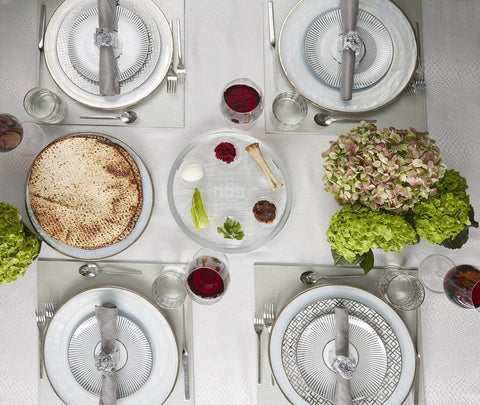
What are traditional items that go on a Seder plate?
The Seder plate foods are different than typical Passover food in that they are symbolic and you don't eat the Seder plate!
- Maror- a bitter herb, usually horseradish, symbolizing the bitterness of slavory
- Hazeret- another bitter herb, usually romaine lettuce
- Charoset- symbolizing the mortar the Israelites used to build the Egyptian pyramids
- Beitzah- a hardboiled egg, symbolizing life and birth
- Karpas- a green leafy vegetable, symbolizing hope, usually parsley
- Zeroa- shank bone, symbolizing sacrifice
What are some unique items that go on a Seder plate?
Here are some unique and meaningful items you can consider for a Seder plate, beyond the traditional six elements:
How do you incorporate social justice into your Seder plate?
- Fair trade chocolate (representing ethical consumption)
- An orange (symbol of inclusion for marginalized groups)
- Olives (representing peace and hope for the Middle East)
What are some ways to make a Seder plate vegan?
- Beitzah- instead of a hard boiled egg, try a roasted avocado pit, roasted white onion, decorative wooden egg or small potato
- Zeroa- instead of a shank bone, try a roasted beet, roasted sweet potato, roasted carrot or decorative wooden or ceramic bone
The key is choosing items that resonate with your family's story and values while maintaining the symbolic meaning of remembering the journey from slavery to freedom.
Find your seder plate.
From handcrafted ceramic to modern acrylic to fine porcelain by Spode and Nambé — shop seder plates from independent Jewish artists that’ll anchor your table.
Shop Seder Plates →
1 comment
I appreciate your site so much! Aside from your awesomeness, humor and great recipes- you share the instructional version of being a Jewish gal! I am not but, I love the education I get and with a side of sass!! We all have what we believe is the “right stuff” but, to be ignorant of others is cray cray!! So, I really love this blog, your wit and the education I get! Thank you so much!